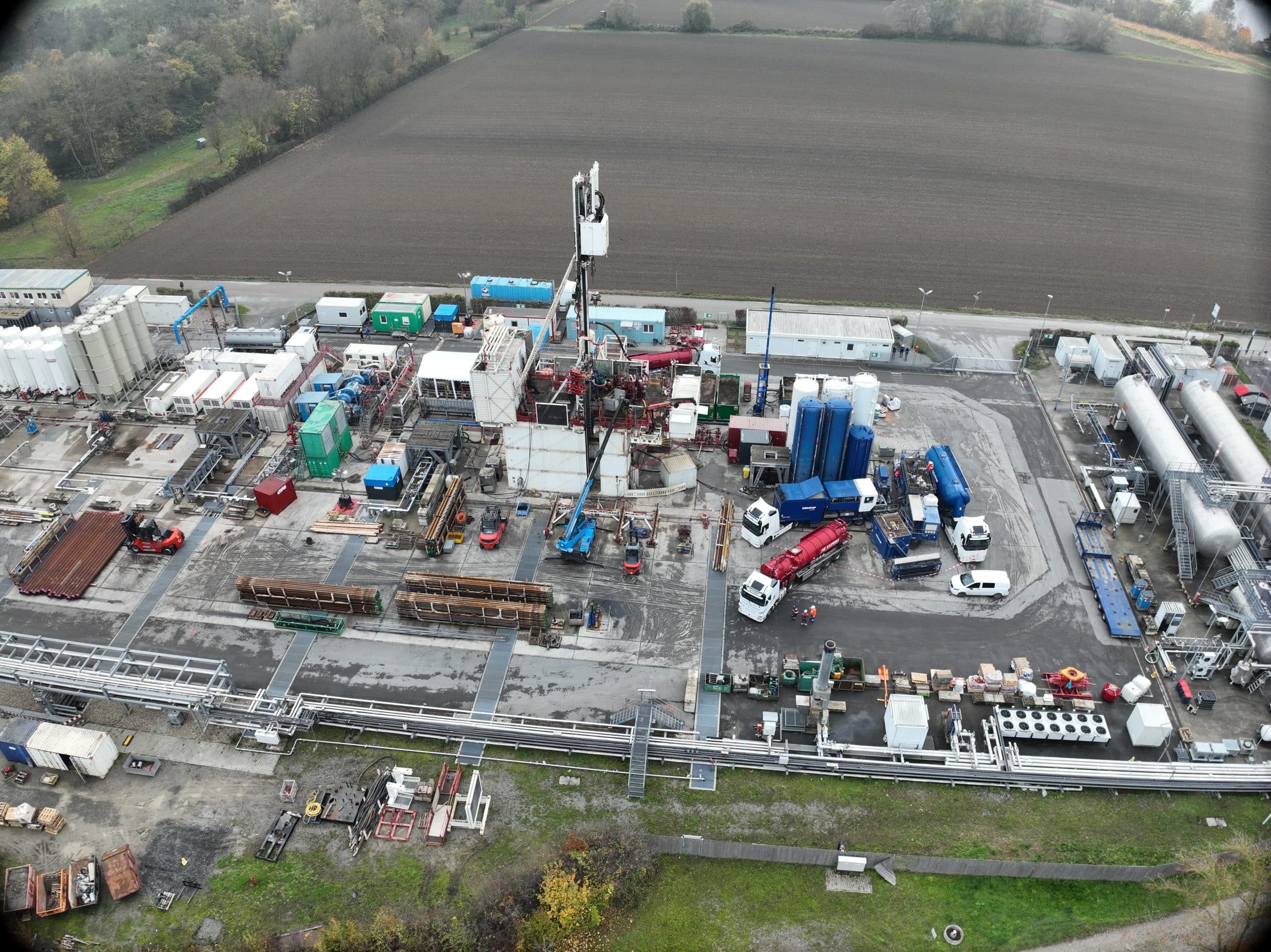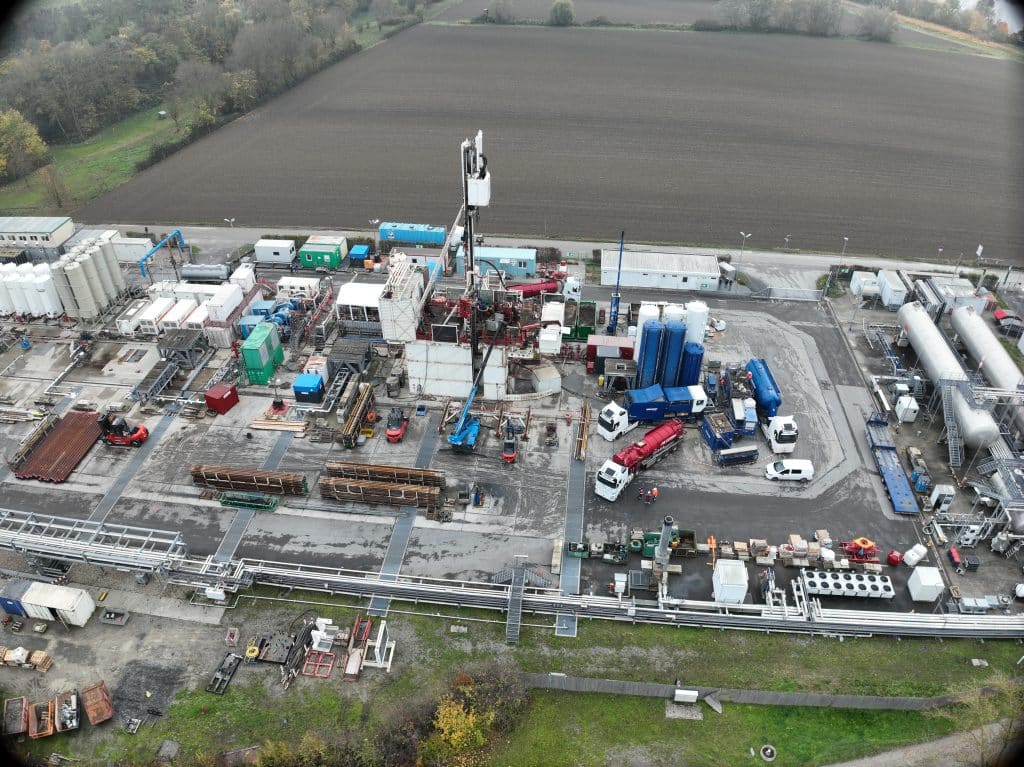
Neptune Energy, Onshore Germany: Well Clean-up and Production Test
Challenge
Neptune Energy required a well clean-up and production test following the drilling and completion of a new horizontal open-hole section on an onshore well in Germany, using an eruptive completion string. The primary objective was to remove filter cake, clean up the well, and confirm reservoir deliverability.
The operation presented multiple concurrent challenges: significant solids production, uncertain reservoir behaviour, tight logistical and time constraints, requiring purpose-engineered surface equipment and optimized solutions.
Solution
WFR deployed a complete surface well testing spread built around a Solids Management System feeding into a three-phase separation train, purpose-engineered for the conditions of the well.
- Wellhead and flow control. A 4-1/16″ 10K ESD valve with remote shutdown stations provided primary well control. A Wattez cyclonic separator (294 barg) captured solids ahead of a 3-1/16″ 10K choke manifold.
- Separation and measurement. A three-phase horizontal separator formed the core of the separation package, supported by a Coriolis flow meter and shrinkage tester for continuous fluid characterisation.
- Gas handling. An Aereon Active CEB 1200 enclosed burner replaced open flare due to the elevated CO₂ content, upstream of combustion and a 20 m stink flare as secondary path.
- Flow assurance. All hydrocarbon pipework was electrically heat-traced, supported by a 10,000 psi heat exchanger and DNV-certified steam generators.
- Tank farm. Three 70 m³ water tanks, two 70 m³ heated oil tanks, one 70 m³ heated water tank, and a 35 m³ acid tank for filter cake removal.
- Data acquisition and safety. Full DAQ with real-time monitoring, complemented by LSA/NORM, benzene and methanol fire detection, and Ex-rated instrumentation throughout.
Execution
The well had been drilled and completed with a horizontal open-hole section using an eruptive completion string — a configuration that, combined with anticipated solids, required the surface spread to be fully prepared for dynamic and unpredictable well behaviour from first flow.
A crew of seven persons per shift, managed operations continuously throughout the campaign. From rig-up, the team worked to commission and integrate the SMS, separation package, enclosed burner system, extensive tank farm, and heat-traced steam boiler arrangement into a cohesive and responsive surface spread.
The decision to deploy enclosed burners rather than open flare was driven by the elevated CO₂ concentration in the produced gas stream, which posed combustion stability and emissions compliance challenges under standard flaring conditions. The enclosed burner system provided controlled, consistent combustion throughout the 168-hour (7-day) flowing period, allowing the production test to proceed without interruption.
Throughout the operation, the team managed concurrent challenges: solids breakthrough required continuous SMS monitoring, and reservoir uncertainty meant the well’s response had to be interpreted in real time to adapt test parameters accordingly. Weather and logistical constraints added further pressure, particularly during the mobilisation and early commissioning phases.
The operation was completed in 22 days from rig-up to rig-down — one day over the planned 21 days — with all activities carried out safely.
Results
The intervention successfully achieved all client objectives.
- Filter cake successfully removed and well cleaned up
- Stable flow achieved throughout the test period
- Well performance exceeded expected parameters
- Gas safely managed with enclosed burner system
- All operations performed safely and in a timely manner
- Operation completed in 22 days (one day over plan due to operational conditions)
This project demonstrates WFR’s capability to deliver tailored well testing and solids management solutions in onshore environments with complex well conditions, high CO₂ content, and demanding logistical constraints.
The operation serves as a reference project for onshore well clean-up and production testing, and reflects WFR’s continued relationship with Neptune Energy.